

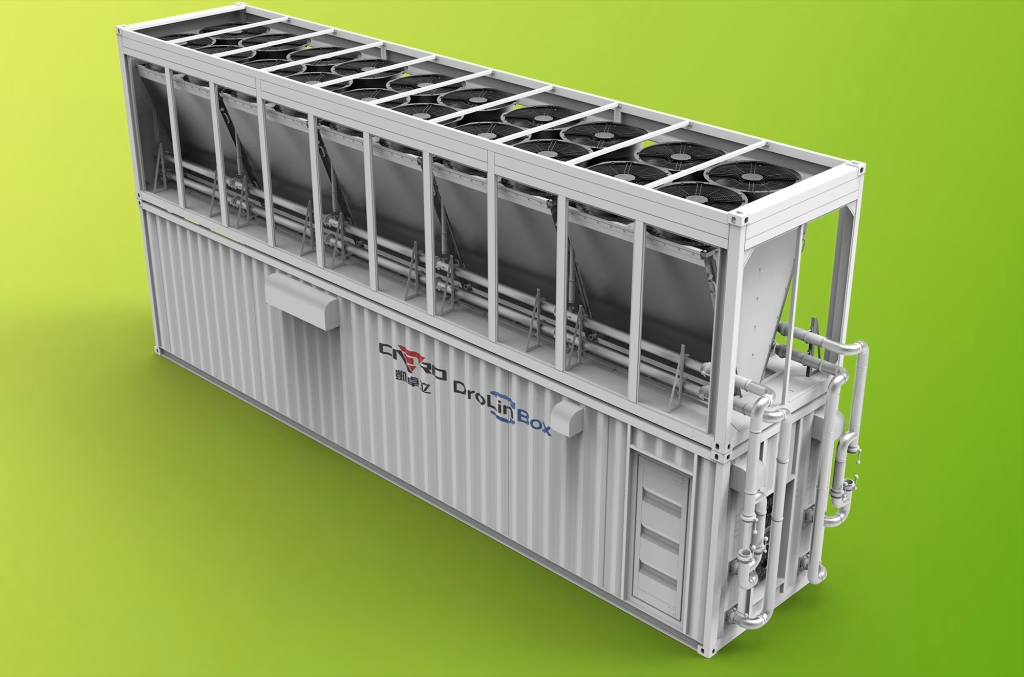
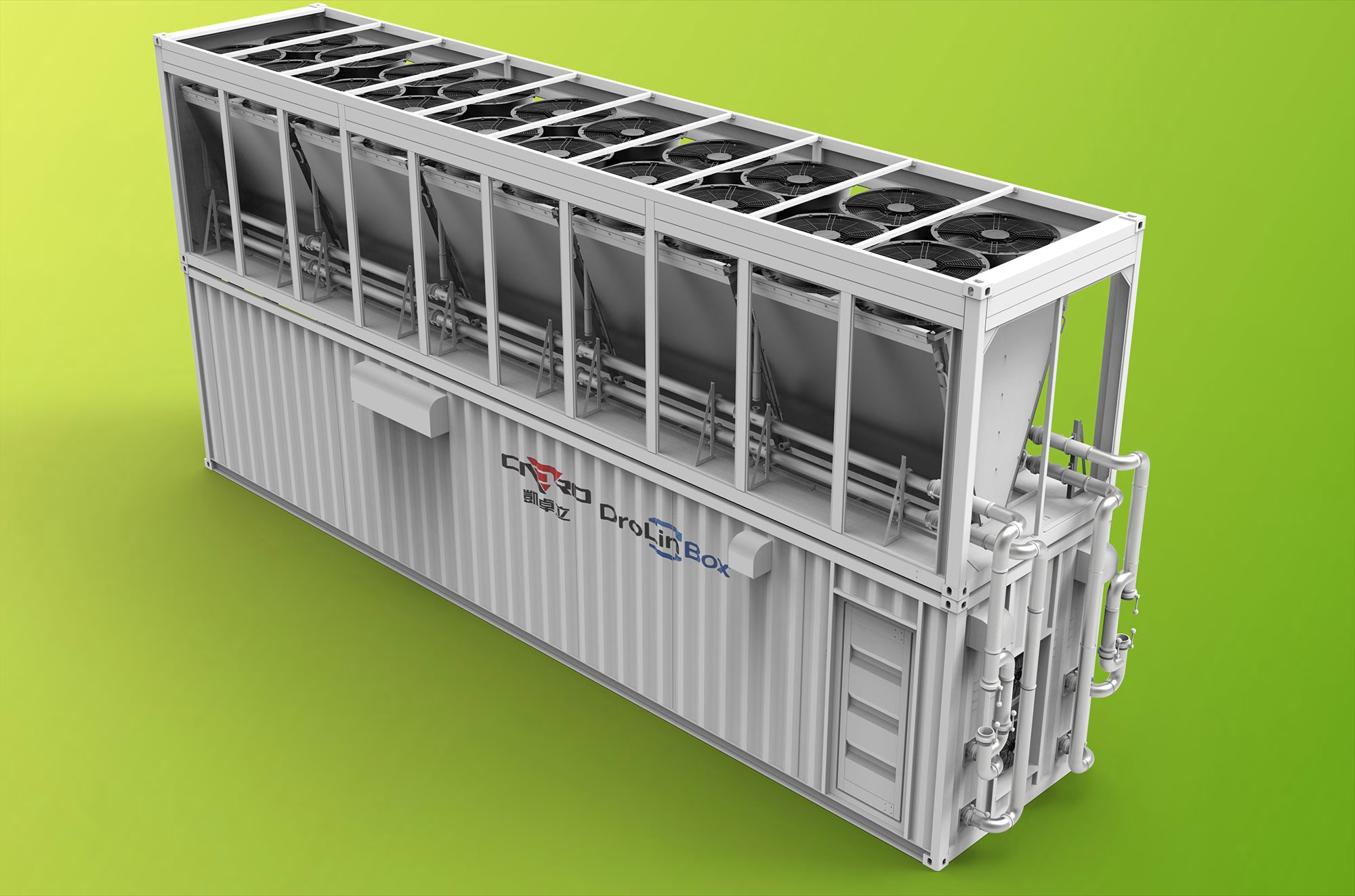
This system adopts a PLC + touchscreen centralized control architecture to manage the entire liquid-cooled container’s circulation piping, primary/standby circulation pumps, make-up water pump, heat-dissipation fan groups, container ventilation groups, motorized control valves, and water-curtain cooling equipment. The system collects and monitors in real time key process data such as piping temperature, pressure, flow, water-tank level, coolant conductivity, and pH value, achieving fully automatic constant-temperature heat dissipation and intelligent constant-pressure circulation control, thereby effectively ensuring the efficient operation of the computing equipment under a constant temperature and stable water environment.
| Category | Equipment / Module | Core Function |
|---|---|---|
| Circulation System | Primary circulation pump, secondary circulation pump, make-up water pump | Ensures continuous circulation of the coolant, automatically maintains stable piping pressure, and automatically replenishes and stabilizes pressure based on pressure changes. |
| Heat Dissipation System | Fan groups A/B (20 units), ventilation fans No.1/2, water-curtain pump | Responsible for coolant heat dissipation and cooling, internal container ventilation, and auxiliary water-curtain cooling in high-temperature environments, ensuring overall heat-dissipation efficiency. |
| Valve System | Main electric valve, secondary electric valve, bypass valve, inlet valve, outlet valve, make-up water valve | Implements on/off logic control of the piping, automatically adjusts bypass flow in response to temperature changes, and stabilizes the supply-liquid temperature and circulation conditions. |
| Monitoring System | Temperature/pressure/flow sensors, leak detection, conductivity/pH detection | Collects system operating data in real time, monitors leakage, over-temperature, over-pressure, and water-quality anomalies around the clock, and provides early fault warning. |
| Human-Machine Interface | Inovance touchscreen | Provides equipment status monitoring, parameter setting, manual operation, alarm viewing, and historical data query and traceability. |
